Freemasons today, to some, may appear as a shell of what they once may have been. This ambiguous statement serves as to suggest that the Freemasons of yesteryear, even with time bolstered reverence to knowledge purported by many, may not have all been in "the know" as many of today's nostalgic and potentially disgruntled Masons would love to believe was the case within the fraternity. With any path seeking enlightenment or as Masons term it "Light", there are always ones who continually dwell in the mental darkness and grope frantically for any semblance of order among the chaos of their psyches. To these members, structure and consistency remain the primary focus along with propriety and order. In a word: it is the "control" that many of today's Freemasons exist solely within, and the repetitious order that it often spawns.
Perhaps there were once more prolific scholars frequenting British and American lodges who contributed greatly to the wealth of knowledge and philosophy that Masons in the 18th and 19th century are noted and celebrated for today. It is quite apparent by declining attendance numbers and lack of true scholarly thought on the subject by current Masons, that much of the focus of such knowledge was left as mere enacted ritual and floor work rather than acquired and taught perspectives of spirituality and self transformation that the framework of the Masonic Lodge has had built into every movement, word and allegory of its work.
If we clearly examine the ritualistic roots and allegorical origins of Freemasonry we find ourselves stepping away from categorically stone mason conventions and into a realm existent with magic, astrology, and the most early of mystic and esoteric beliefs and practices, all the while shrouded within the benign facade of the common builder's craft guild. Inasmuch as there may be holes in the concept that all masons of the past were endowed with a working knowledge of the philosophical precepts and allegorical application of the self transformative work of Freemasonry, today there exists but a small number of Masons who even strive to accept some of the more glaringly obvious practices within the lodge and their implications to much higher and much more ancient workings.
The "free" mason in medieval Europe enjoyed a lifestyle involved with seeing and discussing the significance of building the rooms, decorum, and architectural nuances. They knew the minds of the clergy, aristocracy and certainly the royalty in place throughout the European continent. Early Masons, by necessity, had the ear of the architects and they of the philosophers, mathematicians, and positions of power within many bodies of their society. It was necessary then to ensure the Freemason's knowledge of the importance and significance of that which they were to build otherwise one may posit that such techniques may have been abandoned for more easily accomplished and less expensive/time consuming practice. Perhaps the discussions of such material were imparted within the framework of a craftsman's apprenticeship, continued as a means of artistry, and structured accordingly to a given hierarchy. Nonetheless, the manner in which Freemasonry has chosen to perpetuate and examine the knowledge within, is implicitly engaged within the earliest of mankind's mythologic belief.
Within the halls of ancient Egyptian tombs and palaces and built into the structures of Ancient Rome and Greece, lay the framework of the myth and legend entrenched within the experiential collective mind of the modern religious and pious individual as well as within the guarded mind of the duly initiated Master Mason. It is the same story and set of allegorical experiences, taken by the Sumerians, Greeks and Egyptians, that is celebrated every Judeo-Christian religious holiday and also found deep within the Taliesin legends and the orders of the ancient Celtic peoples of northern Europe. It is this myth; this omnipresent tale of the death of the old and birth of the transformative self to that of the divine and holy oneness with the All that was so feared and misunderstood by the profane and vulgar mind of the power hungry simpletons in care of the spiritual health of their communities and halls of religious practice. It became then necessary to allow for the true aspirant of the mysteries, to find the answers to their query hidden within the most consistent and bold means possible as well as in a manner that is emblematical to the stolid and clear path that particular ancient philosophies and architectures provide and that time has the most trouble erasing.
The earliest examples of ritualistically engaged process of self transformative spirituality are as old as humankind's ability to attempt to discover and coax meaning out of the abyss of their limited conception of the world and universe. Even Neanderthals were believed to have practiced death rituals that encompassed an obvious piety and reverence to the unknown or at least to a philosophical perspective deemed important enough to engage repetition and continuance for the newly departed. It is with this that one may draw the conclusion that the nature of man is to attempt to discover the meaning of existence and the perspective process by which we all eventually meet our demise within this body, and what may lay afterwards. The stories and methods by which a culture has perpetuated itself and belief systems is often most readily available within the layout and structure of the statehood, religious and clerical physical structures and edifices. It would be fair then to assume that that it is in these walls and standing structures that we may discover most about that culture; freely and within plain view. Amidst the seemingly obvious and bold examples of known structures throughout the world and their usage as hidden teaching devices or at least as examples of the resultant philosophical perspectives within a civilization, one may walk among architectural messages and gleamingly direct connections to information and historical knowledge without the smallest of personal transformative change or knowledge imparted by their influence. Truly, as the Hermetic axiom implies: When the student is ready, the teacher appears. In this case the teachers are the structures and their plain-view-hiding is in accordance with many of pop culture's recent fictional interpretations of the purpose of architectural masterpieces. The teachings within the cathedral, the abbey, the chapel, the temple, and lodge, all loom as often inaccessible locations to perpetuate knowledge toward those not necessarily initiated or born into the privileged class of the scholars and clergy. The building then was the format by which all generations would have, when ready for their enormity of impact, the potential access to the more divine mysteries while also applying practicality and applicable usage of building type. It is then very clear that architecture was and is certainly implied and designed as a method of historic record keeping and transformative philosophical and spiritual process regardless of individual dogmatic or societal idiosyncratic modalities.
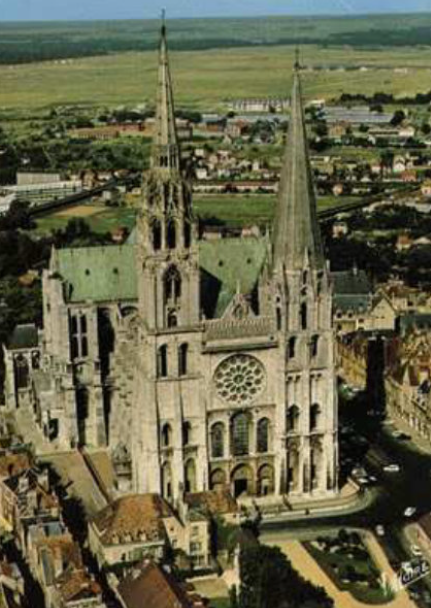
Was then the mere builder the sole keeper of this knowledge and perspective as early Masons would have us believe? In short: No. The Masonic mysteries arose out of a few millennia that concerned itself with being involved with the change that has potential to arise psychologically, spiritually, and at times physically. The "Mason" of today is built upon the foundations (if you will) of practices and belief systems that span thousands of years and had moved through just about every culture in the known Alexandrian/Egyptian/Greek/Celtic/Roman Western world. The "Freemason" was grown out of the repression seen concerning practices not sanctioned by the newly ruling Christian Catholicism and desire for a one religion ruled by a super-minority of clerics and utilized to keep the commoner dependent on the church for access to their spiritual process and overall connection to deity and thus in the dark as to their importance and possible perspective as individuals. The Church was in the forefront of crushing any attempt for the older mysteries to survive and drove the more archaic and esoteric groups either underground; secretly operating and masking their traditions into a superimposed version of the state's sanctioned religion as seen in Celtic Sainthood Worship (as well as latter Santeria and Vodou), or to complete oblivion; executed and nearly wiped out; no longer posing physical threat to the clerics and kings in power as seen with the Gnostic Christians, The Celtic Druids, as well as Knights Templar and certainly with the witchcraft and shamanism of Europe and Early United States. The method by which a practitioner or aspirant to the older mysteries would attempt to be continually and safely invested within the context of such a banned philosophy or practice, would be by the usage of forms and maxims already woven within the fabric of the accepted culture. It then is no mystery as to why one of the places of the most prolific practice of astrology, magic, and spiritual transformation would be shrouded in the unthreatening and mundane mask of a builder's craft guild meeting and their contributions to the grandeur of society through their physical structures. The Masonic Order, under the facade of tools, trade, and geometry, was then free to be the ancient voice of the Coptic magicians, as well as body of the Hermetic and Kabbalistic Alchemists of early Europe. Freemasonry became the more modern of synthesis of perspective on occult and esoteric paths once kept fragmented among groups and splintered within organized religious paths and monastic orders. As the early workings would include symbols indicative of planes of transformation, so too would the Freemason's symbols echo the effect and usage seen by the ancients, only with a builder's perspective on their formation.
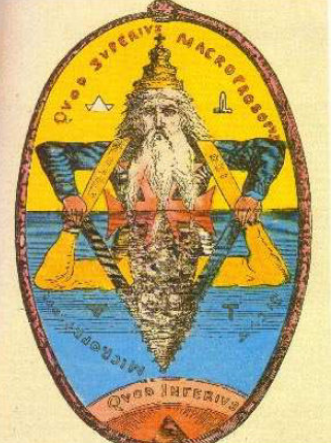
The star of David and of Solomon, for instance, or the ascendant and descendant energetic flow of the Alchemists, or the symbols for fire and water / earth and air, are all seen as the simple Compasses and Square of the builder.
To the uninitiated and common person, these are not threatening images at all, merely tools necessary to complete work by a craftsman. Therefore the secrets and hidden knowledge guarded by the Freemason were "free" to impart to the psyche and soul of one desirous of more intellectual and spiritual light and conversely existed as benign to the suspicious and guarded powers of the ruling class. Any attempt to charge the early mason's secretly convened meetings as heretical were met with the legal trade secret argument even seen today within copyright laws. This effectual disguise was enough to ease concerns (or hide them) of Masonic workings and go as far as to invite the contributing minds of latter magicians and scholars who would otherwise be adversely concerned with a seeming affiliation to anything heretical or outside the sanctioning of the given religious ideology and thus further add to the breadth of knowledge and perspective now seen within Speculative Masonry. One may then ask: Why is the lodge of the Freemason guarded by sword, or secretly convened at all? The short answer is that they are guarding not the trade secrets of the builder alone, but that of the method by which they strive to perceive light or enlightenment and become closer to the understood attainment of the perfect human and eventually God.
The early Mason, in addition to the post-enlightenment Masonic craft, knew of the ramifications of misinterpretation of their workings and clearly guarded their lodge by sword as to not let slip a misunderstood word or symbolic usage and the penalty for such was honestly harsh and pressed with the most severe and gruesome punishment. Aside from the surface need to keep secret the builder's trade and craft secrets, the sword allowed another focus to be present that, again existed within temple workings seen deep within ritual magic of the middle ages. The sword in this case was a spiritual weapon to not only keep off the physical threat of a cowan or eavesdropper, but to also keep at bay unwanted spiritual invasion to the portal of the lodge. The use of the sword here is another quite severe and essential tool by which the portal to the lodge room, or more importantly the entrance to the sacred space, becomes impassable and sealed by the sword of the officer who's duty it is to focus a field of energy into the sword whereby the space within and without the portal are sealed and incorruptible by any influence. As seen in the Book of Genesis, the sword functioned as a symbol of the inaccessibility of the Garden where knowledge, wisdom and life were attainable. With this method exists some of the most ancient synthesis of ritual magic known to the Western world. Within the openings and closings of lodge, and certainly within the various Masonic degrees of initiation, the literal practice of casting circles, or squared circles as seen in Freemasonry, banishing, raising energy, and evocation are clearly present in addition to elements of offerings to deity and sensory deprivation. Masonic Lodge rooms are filled with the usage of ancient symbols of power, as seen on the altar and within the formation of floor work, talismanic magic (Ars Paulina and Goetic manuscripts), employed by the "jewels" of office and within the symbols on aprons, as well as regular usage of wands and staffs for various elemental and spiritual effect. All of which, as seen by the uninitiated and profane mind, serve as direct threat to the accepted and mandated religion of the ruling class and therefore existed continually as a secretly guarded practice of spirituality for its own survival.
The disguise by which wands were employed for this purpose is found tipped with the gavel of the principal officers of the lodge. These officers who are found stationed at the cardinal directions and serve to essentially bless the aspirant numerous times within the allegorical structure of Solomon's Temple, superintend to the passage of the individual and energetic flow around the lodge, as well as focus and announce the presence of that particular station/direction and its properties. The gavel (or even setting maul) is an ingenious method by which to focus the attention away from the magical usage and on to that of authoritarian positioning of an officiate of a meeting. The Freemasons somehow exist with multiple officiates and wielders of power within the lodge. How unique one would think, that a craft guild would consist of more than one head and more than one wielder of a convening gavel. It is in this way that the use of the wand is still present in it's psychically and arguably spiritually effective role in presenting itself with sonic resonance, at the cardinal points, and often coupled with spoken words, and signs indicative of the astrological and elemental passage taken by the individual soul. Direction of that station's focus, to that of the individual, comes as a means to instill, on multiple levels, the assortment of methods by which one may receive and take part in the energetic and psychological experience that the magical circumambulation prepares for the individual as well as the space as a whole.
In the hands of an ancient operative mason, the gavel has one pointed side and one flat one. The edge of which was used for shaping stones and the blunt side for setting them. Looked at from above it resembles a house and the gable of a roof, fittingly "gable" is where the origin of the word gavel originates. (Makenzie's Encyclopedia of Freemasonry) This "house" symbolism may also have a link to the perspective of the body being the stone in which to build a house for the soul as also seen within ancient Egyptian/Coptic and Jewish temples resembling the layout of the human body. Interestingly, the stone masons gavel did not survive within the Masonic lodge, in favor of the double blunted hammer. The gavel now seen as a small cross or intersection also holds with it an additional symbolic representation found within sacred geometry of Northern Europe, Christianity, and the lettering of Greek and ancient Hebraic letters for "T". The three officers in the lodge would then be each a part of the triple Tau of the Hebrews/Greeks and of the Royal Arch and can even be seen as a headless Egyptian Ankh. This perspective might justify the continued use of a gavel rather than a rod or wand as seen in the hands of other stations within the lodge.
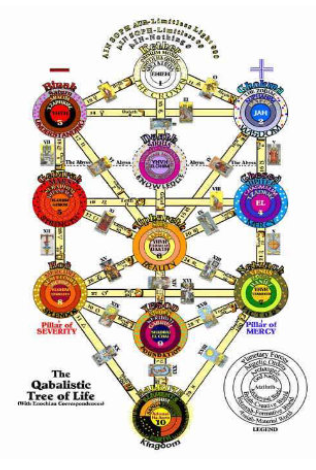
Additionally the rods or staffs held by the junior officers within the lodge are of no lesser or "junior" function to the operation within the magical field of the temple of the freemason. They serve as invocational and banishing tools; operating to bring form and movement to the energetic flow within the lodge room. The white rods carried by the Senior and Junior Stewards are analogous to the white of other invoking magical tools often found in other ritual traditions. The stewards by no coincidence offer themselves as servants to invoke and bring in/down the energetic focus of the ritual. They escort or invoke the candidates through the portal and utilize invocational symbols around them throughout the first three degrees in Masonry. The white and benevolent nature of the rods of the Stewards, tipped with the cornucopia of plenty and sustenance is fitting if we superimpose the Kabbalistic Tree of Life on top of the lodge room (The Golden Dawn -Regardie) and view the Stewards, in their seated position, aligned to the pillar of mercy or Chesed. Conversely, the black rods of the Deacons are analogous to the banishing color seen in ancient and early craft practices whereby their effect is to direct or force an energetic flow or to outright block the undesired from entering the field of practice. The Junior Deacon, by the door of the lodge, effectively guards the portal from within keeping at bay any attempt for an energetic or physical intrusion to the work, while the Senior Deacon escorts the invoked and blessed candidate and aspirant to the mysteries on the casting of the circle of power around the altar. If then the function of the officer in the East is to channel a flow of energy through the body of the officer to the altar in the midst of the lodge, as seen in Solomonic magic of the 12th century and other ritual magic (Clavicula Solomonis -Sibley, Hockley), then the duty of the Senior Deacon is to move that energetic flow around the lodge with the rod on the outside of himself and the candidate, thus keeping the candidate, himself and the newly created circle free from unwanted energies, sacred and pure, as well as pushing a flow of power from the East to all the officers in the lodge for their latter manipulation, focus and direction. We find the Senior Deacon on the right of the Master in the East and in opposition to the Stewards, when we view the lodge again superimposed with the tree of life, he aligns himself with the pillar of Severity or Geburah; an instrument of direct and forceful positioning. 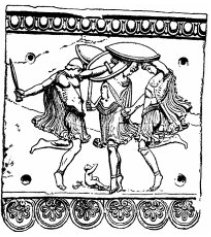 In some older rituals the deacons are positioned as Deacons of today with an additional Inside Sentinel where the Junior Deacon is currently.
It would then be easily assumed that the Deacons and Stewards are counterparts energetically within the concept of the superimposed Tree of Life as well as representing duality within the workings of the temple and the sentinel the intermediary between the portal and the lodge room. As the Stewards are in the light and of a more invoking and benevolent nature so the Deacons are from the darkness, entering into light and of a much more banishment and malevolent potential.
Hence, the reception of the candidate by the Deacons upon entering the lodge in the various degrees is emblematic of quite severe torture and punishment for betrayal and insincerity. It may be fair then to suggest that the Deacons are the representative of the darkness of knowledge and the veil that separates the candidate/aspirant from the light or wisdom of the workings of the lodge. The rod of the Deacons is tipped with a unifying source of light; the sun for the Senior Deacon and the Moon for the Junior.
Each of which is then the ascendant to the black rod of darkness, thus: becoming the emblem of higher ascension to the light of wisdom and knowledge. Fittingly, it is then this ambassador to the psychic and physical darkness who is charged with bringing the candidate forth to the altar of Tiphareth (as viewed again by the superimposed tree of life diagram) and out of the darkness to the light. It is additionally fitting to note that in the first three degrees of American Freemasonry there is no principal officer attending to the North or at least no visible station in which to seat anyone. In this manner the North is viewed not only as the place of darkness told in the Masonic rituals but also another counterpoint to the visible realm of man whereby what is visible and intellectually attainable within the light remains hidden and invisible in the void of intellectual darkness. It is then the focus for the Mason to seek the light and remove oneself from the darkness in order to perceive it, and travel toward the light. In some traditions it is believed that the darkness gave birth to the light and from the darkness was born all existence (Albert Mackey- History of Freemasonry vol IV).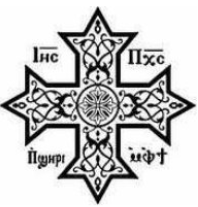
The gavel and rods as seen by the outsider and uninitiated may be nothing more than a method by which to convene the masses and add support to the order of a craft and their meetings or to symbolize a guard's persona. The gavel and rod as seen by an esoteric minded Freemason is the focal point of pushing and pulling power of that station and its individual authority to grant blessing, passage and movement within the allegorical and quite literal transference of power within the circumambulation or recognition of energetic flow within the lodge room. Nonetheless, the usage of the gavel and rods by the principle and junior officers is by design, and identical to, many known forms of ritualistic magic practiced in the ancient (pre-Freemason practices), and modern temples and serves a similar magical, ritualistic, macro and micro-cosmic function to the transmutation of the spiritual psyche of the initiate, despite the potentially ignorant and blind repetition-momentum and complacency of modern Freemasonry and its overt desire to eliminate its intrinsically designed mystical and magical nature, turning it into nothing more than a civic organization that has done more to pander to the desires and prejudice of the non-mason than it has to actually truthfully and wholly educate and bring to light its patrons and members. From Masonry's desires to eliminate penalties upon the altar, the knife or drawn sword as an instrument of torture to the flesh, as well as truly and knowledgeably teaching Kabbalistic and Hermetic philosophy within the workings of a lodge, to that of the lodge existing as open to the public as an existing continuance of the "great Masonic apology" as termed by a lodge master in Colorado and seen in an earlier printing of The Green Mountain Freemason [Vol. 31, No.2 —Ed.].
Freemasonry as the most prolific global methodology to perpetuate the study and workings toward higher knowledge and enlightenment regardless of religious affiliation or dogmatic interruption, is tailor-made, with Greek, Hermetic, Kabbalistic, Coptic, Gnostic and Celtic philosophy, to exist as a current, and still applicable, method for its mem- bers to work toward personal, spiritual, psychological and (yes magical) operations. It remains to be seen what attitude today’s Freemason will take and to what degree the lodges will return these concepts and open workings if at all. The majority of scholars who have written at length on the subject have also gone on to create additional rituals and degrees as a method of feeding a living, breathing and working system. There were those who formulated entire degrees beyond the work of Albert Pike and the American version of the Scottish Rite. Some due to limitations being seen in their current sphere's opinion of Freemasonic workings, even went as far as to formulate entire orders apart from Freemasonry where the higher works were the focal point and not the obscure background. The Hermetic Order of the Golden Dawn, The Servants of the Light, Modern Rosicrucian lineages, as well as the many Druidic organizations, which even Winston Churchill was a member, have gone as far as open evocation and spiritual manipulation of the soul's balance within the elemental world.
 |
 |
Many of these orders faded into obscurity or were left unattended due to the misunderstood nature of the Great Work they attempted and the public outcry for its demise, or they were eventually the victim of membership by insane and unbalanced individuals who ruined the reputation of the masses who were unwilling to stand bold in the face of ridicule and defacement (Gems from the Equinox -Regardie). Will Masonry fade into oblivion serving only to offer charitable support to its community as the Lions, Elks, Rotary, and Kiwanis currently do, or will there once again be a resurgence to the wealth of the past workings and the potential light that remains hidden? Time will tell, and it will be only with the combined scholarly and informed effort of the older and newer brethren that this renaissance of knowledge will ever take place.
Brother Travis W. Shores (2011)



