This article offers a structured exploration of the principles underlying Masonic ritual, focusing on its psychological and symbolic foundations. It examines how ritual engages the conscious and subconscious mind, emphasizing intention, symbolism, and environment, while presenting Freemasonry as a system of personal development grounded in universal principles of human cognition and experience.
Foreword
Unless you have already 'cracked the code' of how the ritual works, giving you this explanation of the principles of Masonic ritual is much like giving you a Chinese puzzle.
You will see how it is structured and will see how it works, but you can only solve it if you are really determined and just keep working at it, because, to understand it you just need to do it again and again until one day it 'clicks'.
The inner meaning of a symbolic system is uncovered slowly as you work with it and the understanding grows until the mind intuitively grasps the meaning of the symbols and the relationship between them.
Like many symbolic systems, the Masonic ritual is many layered and as a speculative system interpretations can vary, so before we begin I would like to say that I have not tried to explain the meaning of the symbols or ritual, but offer my own understanding of the principles on which its rests, which I hope has a value to others.
Introduction
For much of my life I have had an interest in psychology and before I joined Freemasonry I spent some years studying the various spiritual systems such as Buddhism, Taoism and the Western Mystery Traditions.
Since becoming a Mason I have also studied NLP and Hypnosis. This has given me a perspective on how the mind really works and how ritual and symbols work on the conscious and unconscious levels of the mind.
By demonstrating a clear understanding of how the rituals help stimulate inner growth and presenting a credible reason for keeping it secret and performing it in private I hope to show that Freemasonry is a valid and powerful system of personal development built on sound principles which are now being verified by breakthroughs in Psychology and Neuroscience.
Approached from a scientific and psychological perspective and explained in laymen's terms it shows that the Masonic Ritual is founded on a deep knowledge of the human mind.
By avoiding mystical or spiritual explanations, all readers can gain an understanding of what Masonic ritual is really about, whatever their belief about such matters.
The principles and mechanics of how the mind works are universal and those principles used wisely can bring us a growth which our intellect alone cannot deliver.
What is reality?
To be able to explain the principles of ritual and its effects, we need to know something of the machinery we are working with and the environment in which it works.
We are going to explore what human experience really is, how our brain receives it, how our subconscious assesses and filters it and how our conscious mind then interprets it.
So, before we start we need to study the map and learn what the terrain is like. In this particular journey we are exploring how the mind works on both a conscious and subconscious level, so we need to have an idea of what these are. Though we may experience things as physical, mental and emotional all of our experience is actually electrical.
This electrical activity is influenced by many things in the body such as chemical changes but for our purposes the essence of experience is electrical.
The brain, the subconscious and the conscious minds
The Brain
Our physical brain and nervous system might be likened to the physical components and wiring of a computer network.
The body has a huge assortment of sensors for collecting information from the world around us so that we can survive and this information is then transmitted to the brain where it is reproduced or 'rehearsed' as a complex series of electrical patterns performed by the neurons of the brain.
When we see or hear something, electrical signals are transmitted from the eye or ear along the nerve pathways to the brain, where the signals are registered in the area of the brain that processes that particular sense.
This is the physical operation of experience and when an experience is recalled the neurons replay almost the same pattern of electrical impulses to trigger the internal representation of the original experience.
The richer the sensory experience is, the more information there is available for the neurons to play out and the more vivid the memory will be.
This approximates what happens at the physical level of our brain.
Plasticity of the Brain
Another property of the brain which is important to our subject is 'plasticity' of the brain. This is the ability of the brain to modify itself. The more often a particular experience is repeated or remembered, the stronger the neural connections become that are used to process that particular experience. This is a physical result of 'exercising' the particular set of neurons.
Just as physical muscles get stronger by building more muscle cells when regularly exercised, more neurons are built and more connections are made between them when we regularly repeat the same mental exercises or thoughts.
Any habitual thinking patterns, good or bad, have this effect.
Mental Filters
According to the Encyclopaedia Britannica our senses process about 11 million bits of information per second (1) that our subconscious has to filter almost all of it out before our conscious mind is able to make sense of it.
Without that filter we would suffer from an information overload which would at the very least create an extreme amount of anxiety and at worst would cause us to simply cease to function.
This information overload is precisely the experience that many autistic people live with and it is caused by the subconscious filters not operating as they do for the rest of us.
The Subconscious Mind
So now we know how experience happens in the brain we next come to the subconscious mind and all that filtering.
From the moment that the first sparks of consciousness (Electrical 'sparks' if you like!) start to flicker around our developing brain in the womb, we start recording experiences.
We possibly carry a good deal of genetic information already but from our first glimmer of awareness we are collecting experiences and testing them against previous experiences and over time we begin to distinguish patterns.
From the moment we are born we start to continuously test reality. If we feel hungry we cry and hopefully, somebody feeds us. If we pull the cats whiskers it scratches us, if we smile at people they respond and so we start to build an internal model of the world.
There are no rules to the way our internal model is built. If someone with ginger hair repeatedly hurts you before you are able to reason for yourself, then your internal model will trigger anxiety in you whenever you are dealing with somebody with ginger hair and strangely, if these experiences happened to you too early to remember, you may never consciously know why you don't like or trust them.
This model is built by blind chance so it is a rough model, but it is also the most important thing in our lives because it forms the set of rules which your subconscious uses to warn us of danger and make decisions.
It is our benchmark of reality and it is used to measure all experiences against. It is the foundation stone of our values in life and so will affect every decision we make in life.
This is truly the 'Rough Ashlar' of our personality. Our purpose is to work on perfecting that foundation stone.
Our everyday mind is usually unaware of the rules that this model imposes on our decisions.
If there are conflicts between information from the real world and the internal model, and the new experience 'fits' with other parts of the model, then the inner model will be updated to fit with reality and so, slowly we learn usually without being aware of it.
For example we learn when very young that people who smile are being friendly but in time we begin to learn that a smile may mask other feelings so our model of the world is updated to accommodate this.
You can see from this that the subconscious uses deductive reasoning, based on the randomly built internal model.
The subconscious has immense processing power and can draw on a huge amount of data (potentially all your life's experience) but as it can only use deductive reasoning based on the internal model of the world, if the internal model is wrong then it will draw the wrong conclusions.
In this sense it is a simplistic thinker. It could be described as the PASSIVE or RECEPTIVE mind, but to our conscious mind it is unfathomable.
The Role Of The Unconscious Mind
The primary functions of the unconscious mind are survival, physical protection, emotional protection, to maintain health, store memories, regulate emotions and it is also the repository of wisdom, experience & ethics.
The Conscious Mind
Your conscious mind is that part of you that you would recognise as your mind. That's the part of you that is reading this page and knows you are reading this page. It makes decisions by reasoning and weighing options and we like to think we are in control of what we think and in turn what we do. The conscious mind is also goal seeking. This is one of its primary functions and this is a major difference between the conscious and subconscious minds. Our everyday waking self sets its goals and makes its decisions but it is generally not aware that its view of the world is biased and distorted. Reality is actually quite different to what we think because of the distortion and filtering of the subconscious and our internal model of the world.
While the conscious mind seeks goals and purpose, the subconscious seeks meaning.
Because the subconscious continuously looks for meaning, if you are going to communicate with the subconscious it is necessary to do so in a context that is very clearly separate from every day activities.
There is a vital need to indicate to the subconscious that everything that happens in this environment has a meaning and inversely when they are not in that environment there is not necessarily any more than chance meaning. It therefore also follows that as far as possible, there should be no random events once the ritual has begun.
This is the purpose of the regulated ritual laid down and followed in every Masonic lodge. The ceremony as far as is practical should be a harmonious and concise dialogue written and delivered in the symbolic language so that the subconscious makes the internal connections and draws the lessons that are woven into the ritual. This is also the reason that, if by chance there is a mistake made in the ritual or something goes wrong, it should not be taken as a serious problem and as we all make mistakes it should be laughed off light heartedly and not given unnecessary gravitas.
The language of the subconscious mind is symbols
Because the primary function of the mind is pattern recognition and to look for meaning in those patterns, when an experience occurs the first thing that happens is a search for similar experiences. Recognition occurs because many of the same neurons are fired and this is detected by 'consciousness'. (consciousness is something different from the conscious and subconscious minds and not possible to define or discuss here!)
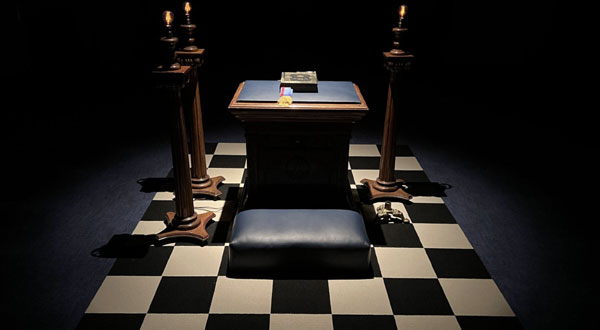
The subconscious thinks in symbols
If a similar experience is found in memory then a conclusion is drawn as to the meaning of that experience based upon the cumulative similar experiences from the past.
This means that any particular type of experience comes to symbolise a particular meaning. This is the start of what becomes a symbolic language and this is how the subconscious thinks. If you can present the subconscious with an experience (such as a particular image together with a particular sound or word and you can instil that event with a specific meaning then the subconscious will pick that up. It has effectively learned a new symbolic 'word' for its vocabulary of meaningful experiences.
This is how the subconscious works naturally and it is these functions that ritual work employs to teach the hidden mysteries in Freemasonry.
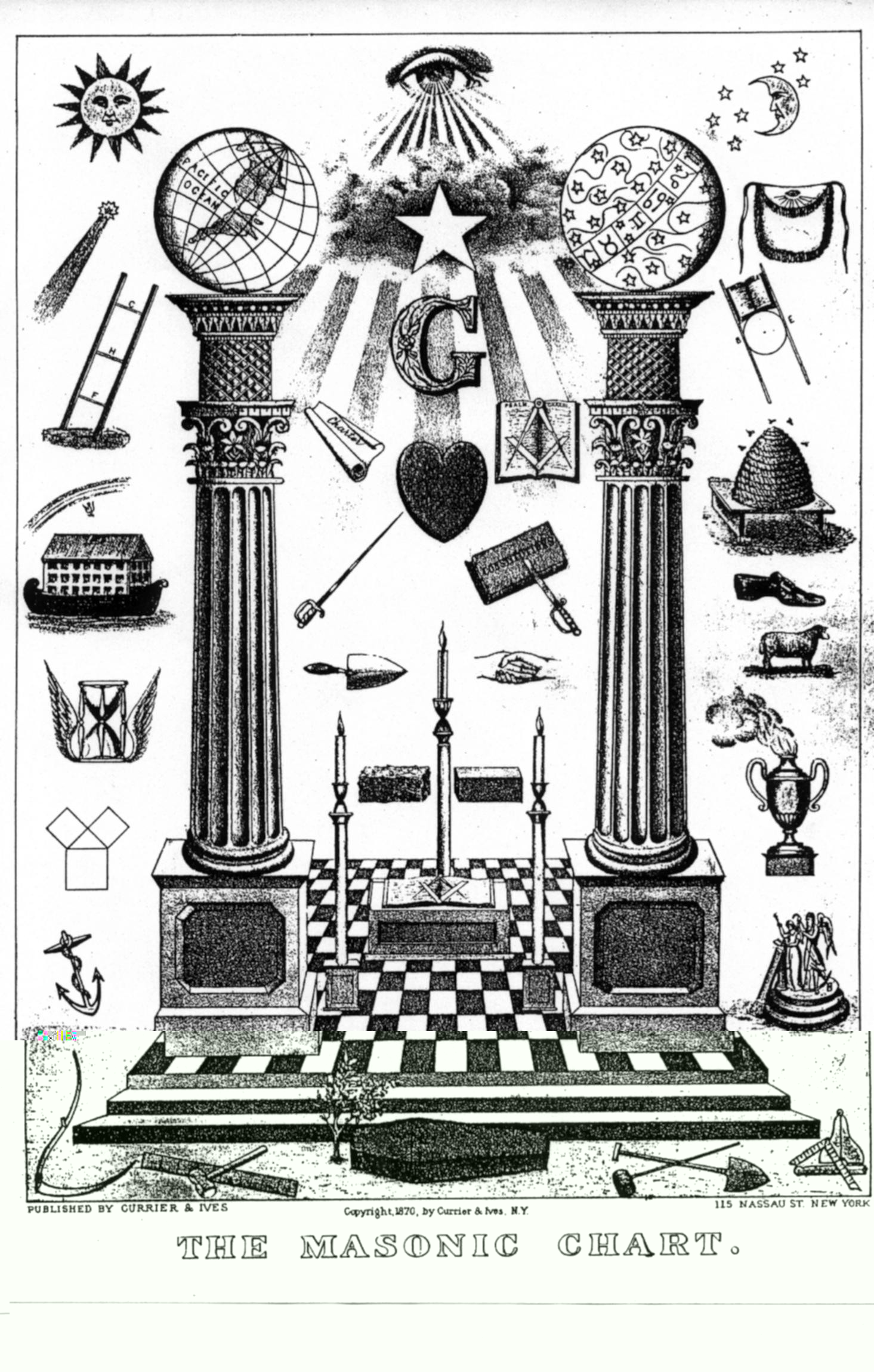 Symbols
So the key to talking to the subconscious is the use of symbols. In the context of this discussion, a symbol is an image, sound, object or idea which the mind associates with a particular meaning.
Simple everyday examples might be a picture of a heart representing love or the colour Red indicating danger. It is possible through deep meditation, therapy or hypnosis to plumb the depths of the subconscious and discover the symbolic associations any individual has formed but it is a slow process. It also possible to present symbols to the subconscious and induce specific meaningful experiences at the same time and therefore link the symbol to that experience. Whenever the individual encounters that symbol from thereon, there will be a tendency to recall the emotion or experience that was induced when it was presented.This is the key to all ritual work, whether it is Masonic, religious or even street gang ritual.
The principle is the link between experience and the symbol presented.
To do Ritual is to work with or on the subconscious mind
The Masonic rituals are stories or plays written in a symbolic language for the subconscious to decipher and understand.
Comprehension of the symbols is necessary to get the intellectual picture but the subconscious assembles the story in the symbolic language, once it has learned the symbolic alphabet being used.
Controlled environment
Having learned about the subconscious, which is the true arena of our ritual work, we move onto the practicalities of ritual and as we are conducting what you may call a fully immersive experience it naturally follows that to give the candidate a clean and concise experience which the subconscious can interpret without confusion we need to perform the ritual in a controlled environment.
Do you remember a time when you were deeply immersed in a movie and then somebody in the household disturbs your concentration?Do you remember how you lose something of the magic of that particular moment in the movie? To have an interruption in a ritual can be a bit like this. Where there is a story leading up to something and then suddenly the moment is broken. This is the reason to hold rituals in private places, behind closed and guarded doors.
Controlled environment
How would you feel if you were halfway through a wedding or a funeral and someone interrupted without warning. Yes, it happens, but we do all we can to ensure it does not and when the aim of the ritual is to deliver a message it is sensible to employ whatever means possible to make sure nothing contaminates that message. If we are going to teach a lesson or lead the subconscious to a new understanding of something and the subconscious tries to associate meaning with experiences, then it is quite important that we control the environment in which our lessons take place to avoid any random experiences which may confuse or 'dirty' the message. The temple is a place set aside to avoid random 'noise' or events that may interfere with the ritual, therefore keeping the message to the subconscious clear and concise.
(Random noise means any sights, symbols, sounds, smells or idle chatter which might distract from the core purpose or intention). The temple is a controlled environment.
The Tyler or Outer guard removes any likelihood of unnecessary interruptions and also has his own symbolic meaning in the context of the ritual, just as all officers symbolise something in the ritual. Some forms of Freemasonry use incense in their ritual which naturally associates the mind with Masonic work. Church or temple incense has the same functions and the sense of smell is known to be one of the most powerful ways of influencing the subconscious.
The Structure of Ritual
The Intention - Every Ritual must have a specific intention
If we are going to communicate with the subconscious then we must have something that we want to communicate. This is what is known as the 'intention' of the ritual. The intention of a ritual must always be defined. This is important because the mind seeks meaning and as the subconscious is open to any random message if not directed by a purpose. The mind seeks meaning so it will look for meaning in random events EVEN IF NOT DIRECTED BY AN INTENTION.
Ritual work performed without a definite intention will tend to dilute the impact of the symbolic system used in the mind of the person using it. Like any language, the purpose of ritual is to communicate so you must have a message. (Conspiracy theorists out there should note that the rituals in Freemasonry are almost exclusively initiatory rituals, which means they are about the moral and spiritual growth of the individual and always in line with the initiates particular religious beliefs. Initiatory rituals by definition are not the foundation for anything untoward. If the stated intention of the rituals is clearly the progressive personal development of the initiate and the content of the ritual is focussed on those things, they obviously can't be anything underhand or negative.) Having a defined intention for the ritual primes the subconscious to look for meaning in the context of the intention. Therefore even accidental or random events make the subconscious try to read a meaning in the context of the intention. It is for these reasons that ritual work should be done in a serious manner but mistakes by any of those performing the ritual should be taken as light-hearted this way mistakes are not read as 'serious' issues by the subconscious, so you could say that ritual should be performed in earnest but practiced in fun.
Types of Ritual Work
As mentioned above, Masonic ritual is only concerned with Initiation. That is the primary work and purpose of the Masonic system. So while I will mention various other intentions I will not go into them in depth here but will outline the primary intentions for which ritual is most often used.
Initiation
As masons we are concerned with the three stages of development represented by the first, second and third degrees. As we are now just looking at the principles of ritual, this is not the place to enter into the symbolic meanings and purposes of the three degrees.
Celebration
A ritual celebration formalises and embodies a message of gratitude. Within the context of religion and spiritual systems it is often an expression of gratitude or celebration to some sort of spiritual or divine power or being, or the celebration of the natural seasons. Other celebrations framed as ritual work tend to be social or civic events which have been instituted for social events relevant to the particular group or society.
Dedication
Mostly used by religious and spiritual organisations to impress upon their members that the item or place being dedicated is set aside as separate (Sacred) for the particular work.
It usually implies a symbolic power or responsibility being invested in a place object.
Solitary Personal development work
This is rarely mentioned in most works on ritual partly because most people assume ritual must necessarily involve several or more people but also because by its very nature, ritual work is private and separated from the normal day to day activities and should remain private for reasons already mentioned. So it is very rare that any individual doing solitary ritual work will talk about it.
I will write about individual work at a later date, but for now I mention it as valid and worthwhile work for anyone looking for a deeper understanding of Freemasonry.
Influencing the objective world or other people
This is what most people would term as the occult and is NOT part of Freemasonry. Most Freemasons would consider this 'intention' as either a superstitious practice or as incompatible with the principles of Freemasonry. There are no rituals in Freemasonry with this intention as all the Masonic Rituals are purely Initiation ceremonies.
The Structure of Ritual
Every ritual has a definite structure and follows a specific process. The structure generally has the following steps or stages:
1. Preparation of the working space
2. The opening
3. The statement of the Intention
4. Preparation of the candidate (For Masonic or initiatory work)
5. Invocation of Divine guidance and blessing
6. The work
7. The closing
8. A libation or celebration (Festive board)
Preparation of the working space
The preparation of the place involves creating a secure environment where the ritual will not be disturbed and is decorated in a suitable manner. The means that there are nothing that will distract the mind from the ritual work and that suitable symbols are laid out ready for the particular ceremony to be performed. The Tyler usually performs this duty in most lodges.
Opening and closing
A marked start and finish is necessary to tell the subconscious when to look for contextual meaning. The opening and closing ceremonies are worth studying in the context of this article as there is a huge amount of meaning in all that occurs and the principles laid out in this article hints at what to look for. When working with the subconscious it is important to signal clearly the start and end of that work, because the subconscious looks for meaning in everything. In many forms of ritual work the lighting and extinguishing of candles represent 'In sacred work' or not.
In the most common Masonic rituals, the indication of being 'at work' is also signalled by the various actions of the officers during the opening and closing ceremonies. It is very worthwhile to study the opening and closing ceremonies in the light of this article. One of the problems with many of the 'New Age' ritual practices is the absence of a defined intention for the ritual, another is not having a clear demarcation between being 'in' spiritual work and 'not in' spiritual work. From what was said earlier about the subconscious needing a clear signal for when to look for meaning it is evident that, without boundaries, after a while the subconscious has no way of ascertaining if it should be looking for special meaning or not, which brings it back to a state where random accident is the driver of what lessons are learned and the inner model is updated accordingly. This devalues the ritual work and renders it ineffective.
Sacred and Profane (The separation from every day life)
The definition of sacred - To separate! There would be an outcry if a surgeon performed surgery without doing it in a clean operating theatre. There is a similar need to work on the inner man in a controlled and 'clean' psychological environment. It is clear then that to separate when we are working on the subconscious mind from everyday life is a necessity if we are to make meaningful changes to the Internal model of the World. This is the root of the concept of something being Sacred. It is to separate it from everyday life and the mundane world so that the subconscious can invest it with a deeper meaning.
Secrecy and Closed doors - controlled environment
The definition of Secret - to keep hidden! So it is clear why would we want to separate what goes on in the Masonic temple from what goes on outside. But why would we want it to be secret?
Why do Freemasons perform their ritual cloistered behind those oaken doors guarded by a sword bearing sentry, ready to defend the lodge from prying eyes and ears? There have been so many theories about Masonic secrecy that it is time the issue was addressed properly. The excessive weight lent to secrecy for the sake of secrecy (or perhaps for the power and control) has stopped even those within the lodge from questioning what or why the work within the lodge should be secret.
Profane
Having defined the idea of what we term sacred, we need to look at its opposite. The conscious mind has a tendency to rationalise things and whenever we think we have found a reason for something we stop questioning it. We stop being curious about what it means. If the intellect (the conscious reasoning facility) gives a meaning to something the result is that the subconscious assumes that we understand it and ceases to look any further.
So if the intellect can rationalise a process or set of symbols the subconscious will tend to cease to engage. If the intellect and the conscious mind can be kept from rationalising then the ritual is so much more effective. There is a saying used in many of the more recent forms of 'brief therapy' that the question 'Why' brings reasons and excuses.
Its implication is that when someone asks why, any answer is likely to stop further investigation or meaningful thought. A much more constructive question is 'to what purpose'. This triggers more meaningful thinking. So part of the reason for keeping the ritual separate from the outer world is that if the various symbols and patterns used within the ritual are known to the general populace it loses something. It loses its quality of being 'sacred' (separate) and becomes common or familiar (profane). As a symbol becomes familiar it also loses its potential to trigger an internal search for meaning and therefore becomes much less useful in communicating the particular meaning to new initiates. This devalues the whole system and as the system has a true value in the spiritual growth it engenders, there is good reason to protect it. In the spiritual context, this is the true meaning of the word profane. It is the state of something which has lost its distinction of being 'separate' or sacred and therefore lost its power to stimulate growth. This is the true purpose of secrecy in Masonic ritual.
Closing
I have outlined the principles underlying Masonic ritual and given a little about the structure. I would recommend studying the ritual to see if you can identify the different sections of the ritual, what actions or objects might symbolise being 'at work' or not. The purpose of the allegorical stories and symbols used within the ritual is to encourage curiosity.
Be curious, but don't be in a hurry to find the answers.
-0-
The amount of satisfaction from solving a puzzle is proportionate to the amount effort put in to finding the solution.
The pleasure gained from solving it comes from the time spent working at it.
This article is supplied FREE to subscribers to the Virtual Lodge of Instruction Newsletter, which is available on the 'Virtual Lodge of Instruction' website at [www.virtual-loi.co.uk](http://www.virtual-loi.co.uk).
The Virtual Lodge of Instruction is an interactive multi-media software tool to help English Freemasons learn their ritual.
(Copyright © Lucius Dell'Alba - April 2013)



